
Wage Wars in Fiji: Reality Check or Poverty Ploy?
Hey, ever wondered why wage debates feel like a tug-of-war in Fiji right now? It’s heating up, with employers firing back at unions accusing them of paying “poverty wages.” But here’s the kicker—those employers say this claim is way off base and misses the nitty-gritty of Fiji’s economic scene.
Employers Say, “Hold On a Minute…”
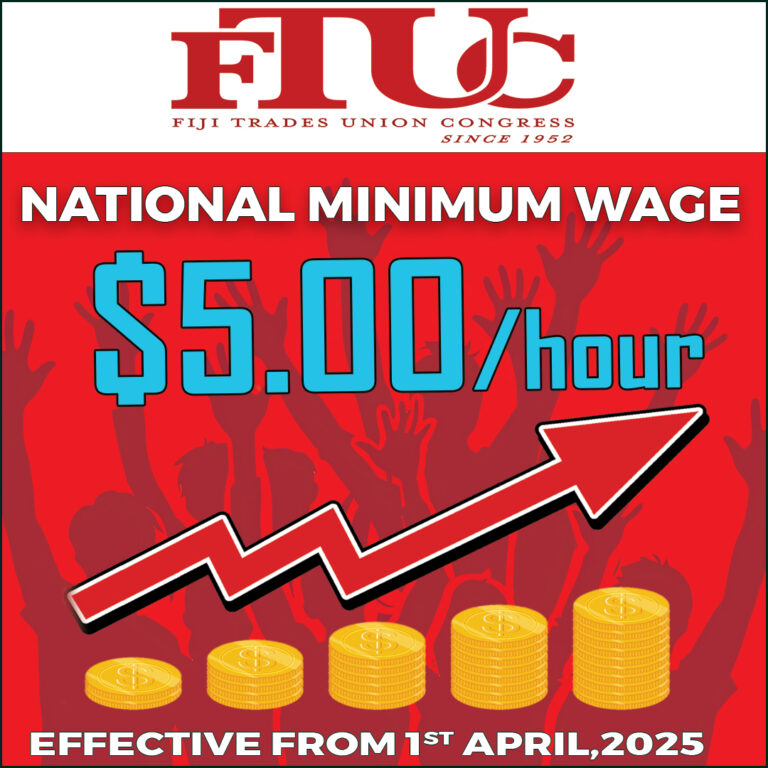
The Fiji Commerce & Employers Federation (FCEF) big players when it comes to business voices—is standing firm in defense. Their CEO, Edward Bernard, was pretty clear: “Fiji’s wages are actually among the highest in our neck of the Pacific.” Wait, wasn’t there talk about poverty wages? Bernard throws in some eye-openers: Since 2015, the minimum wage has jumped an astonishing 115%, from $2.32 to a cool $5 per hour. And get this it’s one of the fastest rises globally. So, if someone’s painting Fiji as a wage laggard, they’re not telling the whole story.
Now, that doesn’t mean life here is a breeze. Fiji’s economy isn’t some high-flying jet-setter like Australia or New Zealand. Still, even though Papua New Guinea’s economy is roughly four times bigger, Fiji’s minimum wage beats it by 60%. That surprise jab complicates the simple “poverty wage” narrative, don’t you think?
But Here’s the Flip Side…
Join Jobs Fiji WhatsApp Channel
Click the button below to join our WhatsApp channel for updates.
Join NowNow, here’s where it gets interesting. The Fiji Trades Union Congress (FTUC), led by General Secretary Felix Anthony, isn’t buying it. They’ve kicked off a campaign pushing for $6 an hour minimum wage, calling current rates a “poverty trap.” Anthony argues it’s not just about numbers it’s about dignity, fair pay, and investing in workers’ skills to actually boost productivity.
Bernard fires back, though, pointing out that pushing wages too high could cramp business growth, especially for small and medium businesses already sweating over rising costs think: a 5% corporate tax hike, freight charges that make you wince, plus the challenge of finding qualified workers. Oh, and did you know that companies can’t fully use a special levy meant to help with worker training? So, while unions wave the flag for more investment in skills, employers feel stuck without the funds to deliver.
And there’s the productivity elephant in the room Bernard points fingers at worker absenteeism dragging things down, urging unions to tackle that head-on if they’re serious about an efficient workforce.
A Balancing Act?
What’s clear is this conversation isn’t about black-and-white truths. It’s a delicate dance between paying workers fairly and keeping businesses afloat. The FCEF calls for more teamwork between government, unions, and employers because, honestly, there’s no quick fix when livelihoods and the local economy are both at stake.
So, what’s the takeaway? Fiji’s minimum wage debate isn’t just dollars and cents. It’s about real people, households juggling daily expenses, and businesses trying not to keel over in tough times. The push for $6 an hour raises a valid point about living wages—no doubt about that but the counterarguments highlight some hefty hurdles.
At the end of the day, any wage hike needs to walk a tightrope enough to lift workers up but not snap the fragile threads holding local businesses together.
What do you think? Is $6 the magic number, or is there a smarter way forward? Either way, as this story unfolds, keep an eye on how Fiji navigates the tricky waters of fair pay and economic survival.